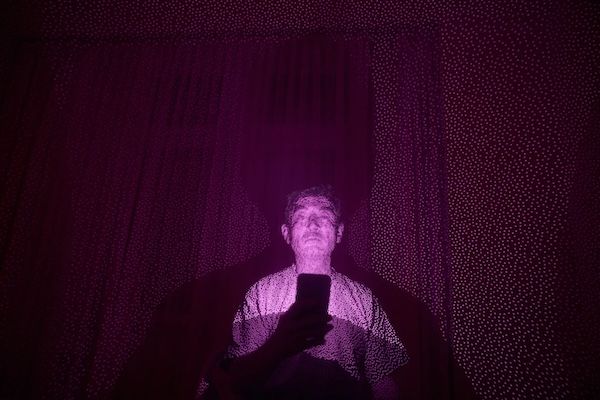
"When you unlock a phone, step into view of a security camera or drive past a license plate reader at night, beams of infrared light — invisible to the naked eye — shine onto the unique contours of your face, your body, your license plate lettering. Those infrared beams allow cameras to pick out and recognize individual human beings. Over the past decade, facial recognition technology has gone from science fiction fantasy to worldwide reality — nowhere more so than in China, home to more security cameras than the rest of the world combined. … By law, anyone registering new SIM cards in China must show themselves to a face scanning camera, the images stored in telecom databases. And until recently, Chinese authorities required most guests to scan their faces when checking in to a hotel." |
|
|
Valentine's Day doesn't need another candlelit dinner — it needs better sleep. When nights are loud, short, or restless, everything else suffers: mood, patience, connection. Ozlo Sleepbuds help couples protect their sleep with science-backed soundscapes that mask snoring, city noise, and midnight chaos without bulky machines or painful earplugs. Wake up rested, present, and way more into each other. Consider it romance, optimized. [Ad] |
|
|
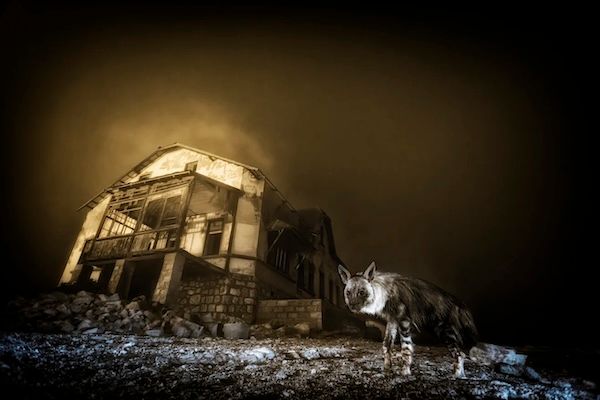
"Click. Photographer Wim van den Heever scans the image that his camera trap, triggerable by motion, has captured. It lays bare the tattered skeleton of an abandoned building in Kolmanskop, Namibia, a once-bustling mining village long-since reduced to a ghost town. There is not a soul in sight. Click. Another trigger. The same eerie, yet ultimately desolate, misty nighttime landscape stares, almost mockingly, back at the South African. Click. The trap is set off a third and final time. Van den Heever gazes dumbfounded into the obsidian eyes of an animal rarely seen by humans, and in them, sees the realization of an image he shaped in his head a decade ago." |
|
|
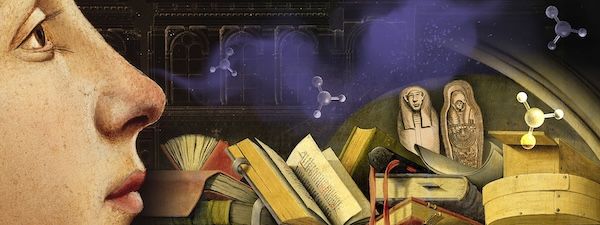
"We often learn about the past visually — through oil paintings and sepia photographs, books and buildings, artifacts displayed behind glass. And sometimes we get to touch historical objects or listen to recordings. But rarely do we use our sense of smell — our oldest, most primal way of learning about the environment — to experience the distant past. Without access to odor, 'you lose that intimacy that smell brings to the interaction between us and objects,' says analytical chemist Matija Strlič. … Strlič has devoted his career to interdisciplinary research in the field of heritage science. Much of his work focused on the preservation and reconstruction of culturally significant scents." |
|
|
You want premium gaming access, not another subscription you forget to cancel. Xbox Game Pass Ultimate lets you go all-in without locking you down, with hundreds of games across console, PC, and cloud. New releases, indie gems, and multiplayer chaos are all included, so you can binge responsibly, ghost freely, and walk away when you're ready. [Ad] |
|
|
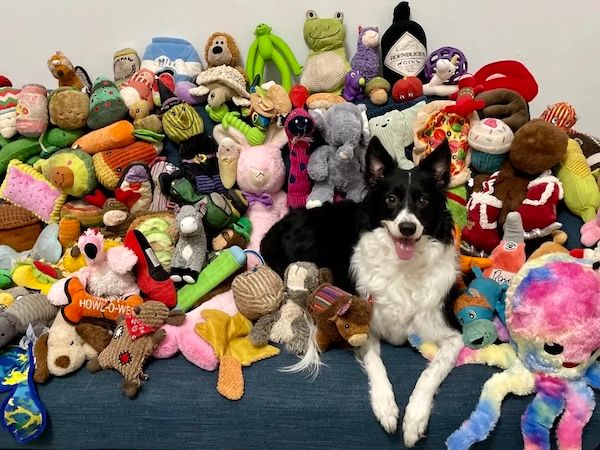
"If you've ever had to spell out words like W-A-L-K or T-R-E-A-T around a dog, you know that some dogs listen in to humans' chitchat and can pick out certain key words. Well, it turns out that some genius dogs can learn a brand new word, like the name of an unfamiliar toy, by just overhearing brief interactions between two people. What's more, these 'gifted' dogs can learn the name of a new toy even if they first hear this word when the toy is out of sight — as long as their favorite human is looking at the spot where the toy is hidden." |
|
|
Interested in having one of your social posts featured in The Futurist? |
|
|
Powered by StackCommerce
17383 Sunset Blvd. Suite A345
Pacific Palisades, CA 90272
Copyright © 2026 StackCommerce
All rights reserved | |
|
|





![Ozlo - Love is patient. Love is kind. Love is also letting each other sleep. | [Partner]](https://library.iterable.com/1435/4842/d0f76e5ece6944c9a5f8f6cb376523c2-20260213_futurist_2_ozlo.jpg "Ozlo - Love is patient. Love is kind. Love is also letting each other sleep. | [Partner]")



![StackSocial - A gaming subscription for people who hate subscriptions | [Partner]](https://library.iterable.com/1435/4842/9fab7f29ad90433a9cb1e46c9110bcea-20260213_futurist_5_xbox.jpg "StackSocial - A gaming subscription for people who hate subscriptions | [Partner]")





Tidak ada komentar:
Posting Komentar